Party Drink Quantity Checklist: Plan the Perfect Amount
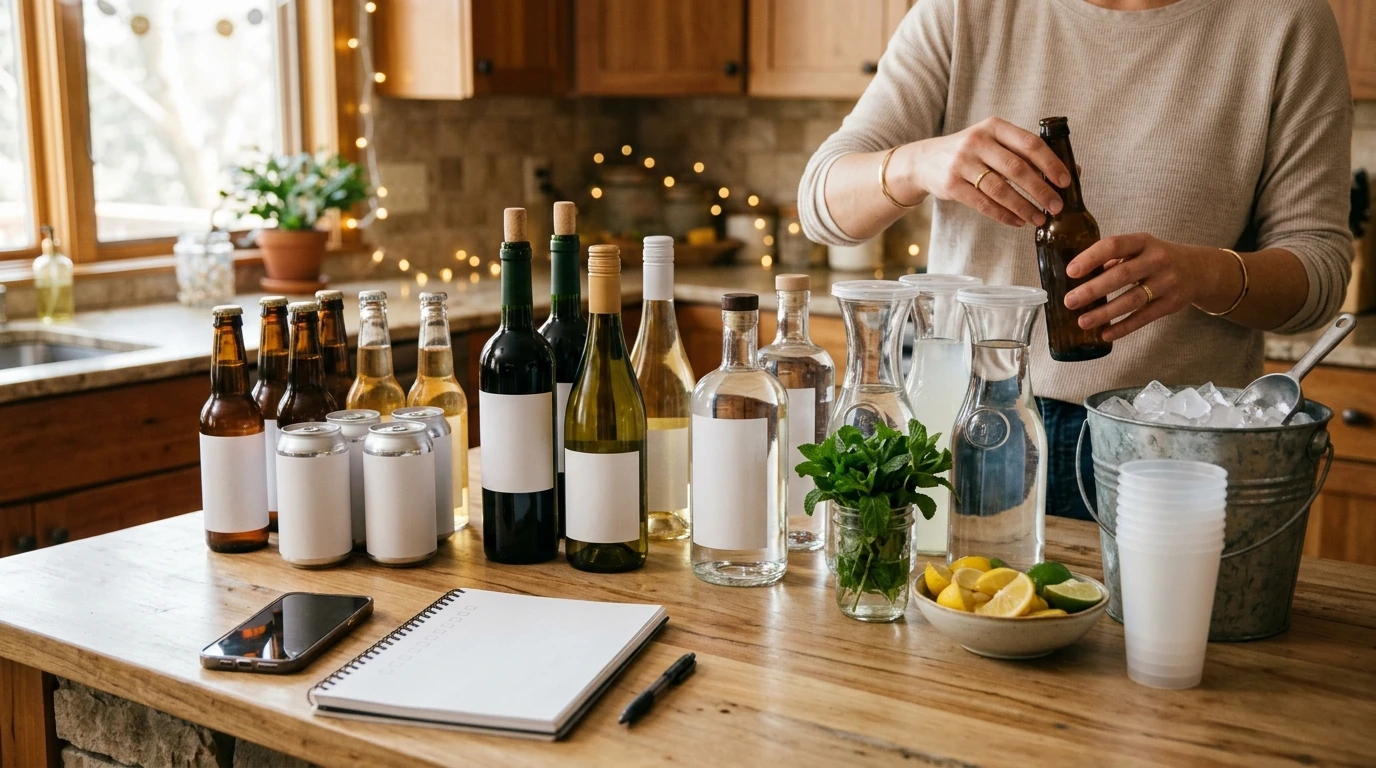
Running out of drinks (or buying far too much) can throw off the budget and the vibe. A simple checklist based on guest count, party length, and drink preferences makes it easier to plan beer, wine, spirits, mixers, ice, and non-alcoholic options with less guesswork. If you want a reusable one-page planner you can keep on your phone while shopping, the Party Drink Quantity Checklist is a quick way to plug in your numbers and get a clean shopping list.
Start with the three planning numbers
- Guest count: separate adults who drink alcohol vs. those who don’t; note any underage guests.
- Party length: typical planning works best in 2-hour blocks (2–4 hours is common).
- Drinking style: light (0–1 drink/hour), moderate (1 drink/hour), or festive (1–2 drinks/hour) depending on the crowd and event type.
These three inputs do most of the heavy lifting. You can have the same number of guests at two different events and need totally different quantities if one is a brunch with pastries and the other is a cocktail-forward celebration.
Quick drink-count estimator (use this before shopping)
Start with a simple baseline and then fine-tune it to your crowd. Most overbuying happens when you skip the math and “shop by vibe.”
- Rule of thumb: total drinks = (guests who drink) × (hours) × (drinks per hour).
- Adjust down for daytime events, heavy food menus, and kid-focused gatherings; adjust up for cocktail-forward parties and celebrations.
- Plan a cushion of about 10–15% for surprises and spillage, then cap it to avoid excess.
- Convert “drinks” into formats: beer can/bottle ≈ 1 drink; 5 oz wine ≈ 1 drink; 1.5 oz spirit ≈ 1 drink (standard servings).
For standard serving references, the NIAAA standard drink guide is a helpful, authoritative visual. For general alcohol basics and safety context, see the CDC alcohol basics.
Fast estimates by party length (moderate crowd: ~1 drink per person per hour)
| Guests who drink | 2 hours (drinks) | 4 hours (drinks) | 6 hours (drinks) |
|---|---|---|---|
| 10 | 20 | 40 | 60 |
| 20 | 40 | 80 | 120 |
| 30 | 60 | 120 | 180 |
| 50 | 100 | 200 | 300 |
Translate drink counts into a balanced shopping list
Once you have a total drink count, decide what percentage should be beer, wine, and cocktails. For many mixed groups, a simple split is 40% beer, 40% wine, 20% cocktails (by drink count). If you’re skipping cocktails, move that 20% into beer and wine.
- Pick a beverage mix that fits the event: Beer + wine is simplest; add spirits only if cocktails are expected.
- Beer: choose 2–3 styles (for example: light lager, IPA, and a non-alcoholic/low alcohol option).
- Wine: aim for roughly half red, half white; add sparkling for celebrations if it fits the moment.
- Spirits: choose 1–2 base spirits that cover multiple drinks (vodka + tequila or vodka + bourbon are efficient).
- Mixers and garnishes: citrus, simple syrup, tonic/soda, cola/ginger beer, plus a few fresh garnishes to elevate basics without slowing service.
Example purchase plan for 20 drinking guests, 4 hours (about 80 drinks total)
| Category | Target drinks | What to buy (example) | Notes |
|---|---|---|---|
| Beer | 32 | Two 24-packs (48 beers) | Covers preferences and allows extras |
| Wine | 32 | 5 bottles (25 glasses) + 2 extra bottles | 1 bottle ≈ 5 servings |
| Cocktails | 16 | Two 750 ml spirits + mixers | A 750 ml bottle yields ~16 shots (1.5 oz) |
| Non-alcoholic | — | Sparkling water, soda, NA beer, juice | Aim for at least 1 NA option per guest |
If you’re hosting on a tighter spend and want to keep costs predictable, building your drink plan alongside an overall party budget can help. The The Empowered Budgeting Toolkit can make it easier to set a target number and stick to it—especially when you’re balancing food, decor, and drinks.
Don’t forget the “support items” that make drinks last
- Ice: a common baseline is 1–2 lbs per guest for a 4-hour party; add more for hot weather or lots of shaken drinks.
- Water: offer a visible self-serve station; include still and sparkling options if possible.
- Cups and bar tools: plan separate cups for water vs. cocktails/beer to reduce waste and refills.
- Coolers and chilling time: prioritize pre-chilling beer and white wine; keep a backup cooler for overflow.
- Waste and recycling: set out bins near the drink area to keep the main space clean.
A practical trick: treat ice as two categories—drinking ice (clean, in a covered bin) and cooler ice (for chilling cans/bottles). Separating them keeps the drink station neat and makes your ice last longer.
Make the checklist match the occasion
- Dinner party: fewer total drinks, higher wine share; consider pairing whites/reds to the menu.
- Game day: heavier beer share; stock easy-to-grab cans and plenty of ice.
- Brunch: lighter ABV options (mimosas, spritzes), plus coffee and juice.
- Kids and families present: increase non-alcoholic variety and place alcohol away from kid traffic.
- Outdoor summer event: more water, more ice, lighter beverages, and a plan for rapid chilling.
Common planning mistakes to avoid
Printable checklist option (quick setup)
If you’d like a ready-to-fill version, the Party Drink Quantity Checklist keeps the core math and shopping categories in one place so you can plan quickly without redoing the structure every time.
FAQ
How to estimate the number of drinks for a party?
Use: (number of guests who drink) × (hours) × (drinks per hour). For many gatherings, 1 drink per person per hour is a solid baseline; adjust for time of day, food, and your crowd, then add a small 10–15% cushion.
How much ice is needed for a party?
A practical baseline is 1–2 lbs of ice per guest for about 4 hours. Plan on more for hot weather, outdoor events, and cocktail-heavy setups where ice is used both for shaking and for chilling.









Leave a comment